
Bolingbrook Previous Residents by Era
The source changes with the date and county. Parcel rolls identify an assessed owner, not every person at the home. Recorder indexes establish transfers. Phone books identify subscribers, while released census schedules can reveal a household. Previous residents emerge from dated evidence, not one timeless roster.
| Source | Years covered | Where held | What it shows |
|---|---|---|---|
| Will recordings | 1836 onward; web index generally 1965 onward | Will Recorder, books and microfilm | Transfers, parties, liens, plats |
| DuPage recordings | 1839 onward; images from March 16, 1961 | DuPage Recorder | Deed chain and legal descriptions |
| Fountaindale material | Maps for 1973-77, 1986, 1993, 1995; phone books 1977 onward | Fountaindale Library | Street and subscriber clues |
| 1973 white pages | February 1973 | Library of Congress | Name, phone and address |
| Federal census | Public under the 72-year rule | National Archives | Households and geography |
| Will probate | 1837-1900 at IRAD; later clerk files | IRAD and circuit clerk | Estates, heirs and wills |
Begin recent Bolingbrook work with the assessor and deed index. Pair a 1970s deed with a dated phone book and map. Earlier work often moves to county books, probate series, census schedules, and IRAD.
Start Bolingbrook Address History Precisely
Normalize the street address, but do not let its mailing label choose the county. Use the Will property portal or DuPage Property Lookup to capture the PIN, county, township, legal description, subdivision, lot and block. A situs address means the physical site. A tax mailing address may belong to an owner elsewhere.
Compare the parcel in the applicable GIS viewer. A legal description is the durable bridge when street spelling, suffixes, or numbers differ. No verified mass renumbering of Bolingbrook streets was found. Keep every old spelling and subdivision name in the notes.
- PIN
- The parcel identification number assigned by the county.
- Grantor and grantee
- The party transferring an interest and the party receiving it.
- Chain of title
- The linked sequence of recorded transfers.
- Legal description
- The lot, block, subdivision, metes, or bounds defining the land.
Walk Bolingbrook Deeds Backward
Search the present owner as a party in the proper recorder index. The current purchase deed should identify the seller. It also supplies a recording date, document number or book and page, type, and legal description for the next search.
- Confirm the owner, PIN, subdivision, lot and legal description.
- Search the owner, then narrow by address, PIN, date and deed type.
- Note the seller, recording details, parties, and legal description.
- Search that seller as an earlier buyer and match the land description.
- Repeat until the web range ends, then use books, microfilm, plats, or staff help.
Trusts, estates, firms, and land trusts can interrupt the natural-person chain. Search both roles and related affidavits, notices of death, transfer-on-death instruments, executor deeds, easements, plats, liens, and powers of attorney. An index is evidence, not a title opinion.
The Will Recorder search methods explain its routes and field choices.
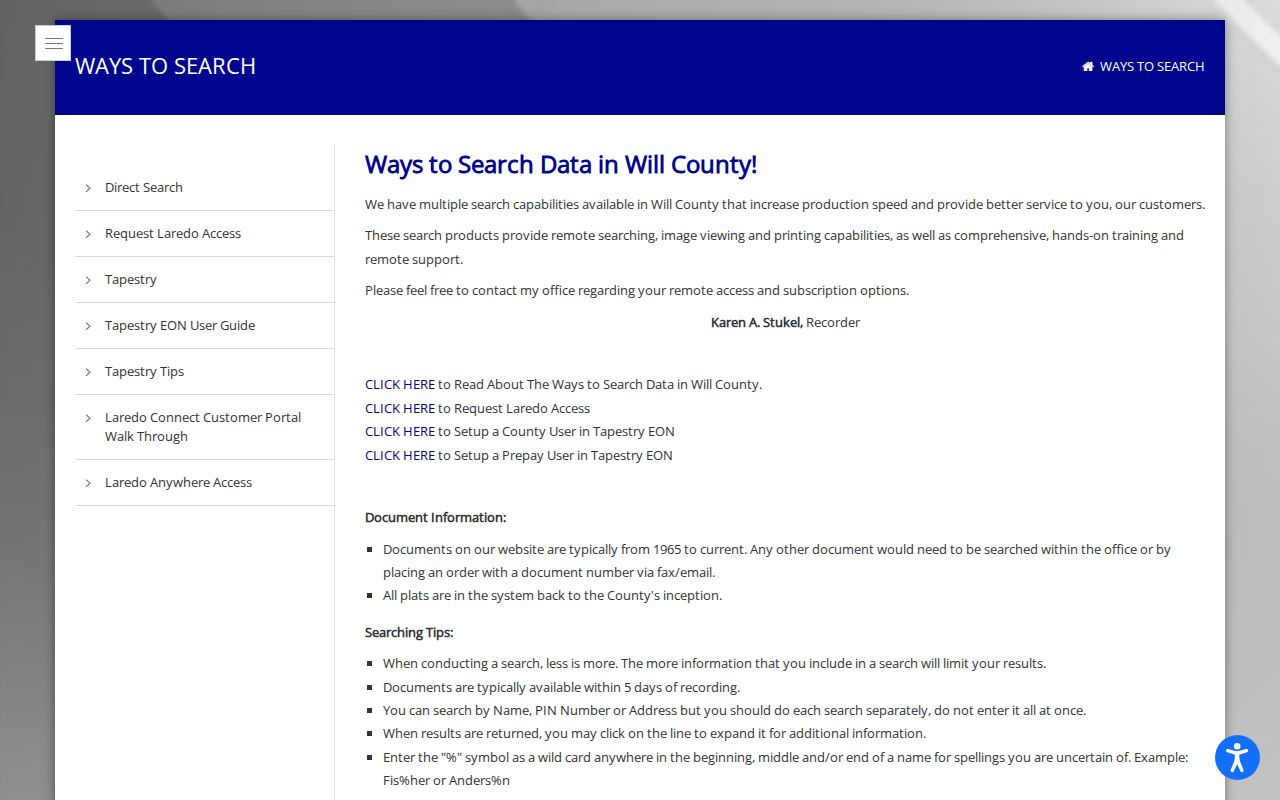
The view helps readers select party, address, parcel, or book-and-page methods when one form of a name fails.
Bolingbrook Records Cross Two Counties
Will Direct Search is generally useful from 1965 forward and can lag recordings by about five days. A percent sign works as a wildcard. The index accepts party, parcel, address, date, document type, book and page, plus lot and block searches. All Will recorded documents remain held from 1836, so the web cutoff is not a loss date.
DuPage reports indexed documents and images from March 16, 1961. Older instructions distinguish name indexing from 1961, PIN indexing from 1985, address indexing from 1995, and plats from the 1800s. The DuPage Recorder search appears below.
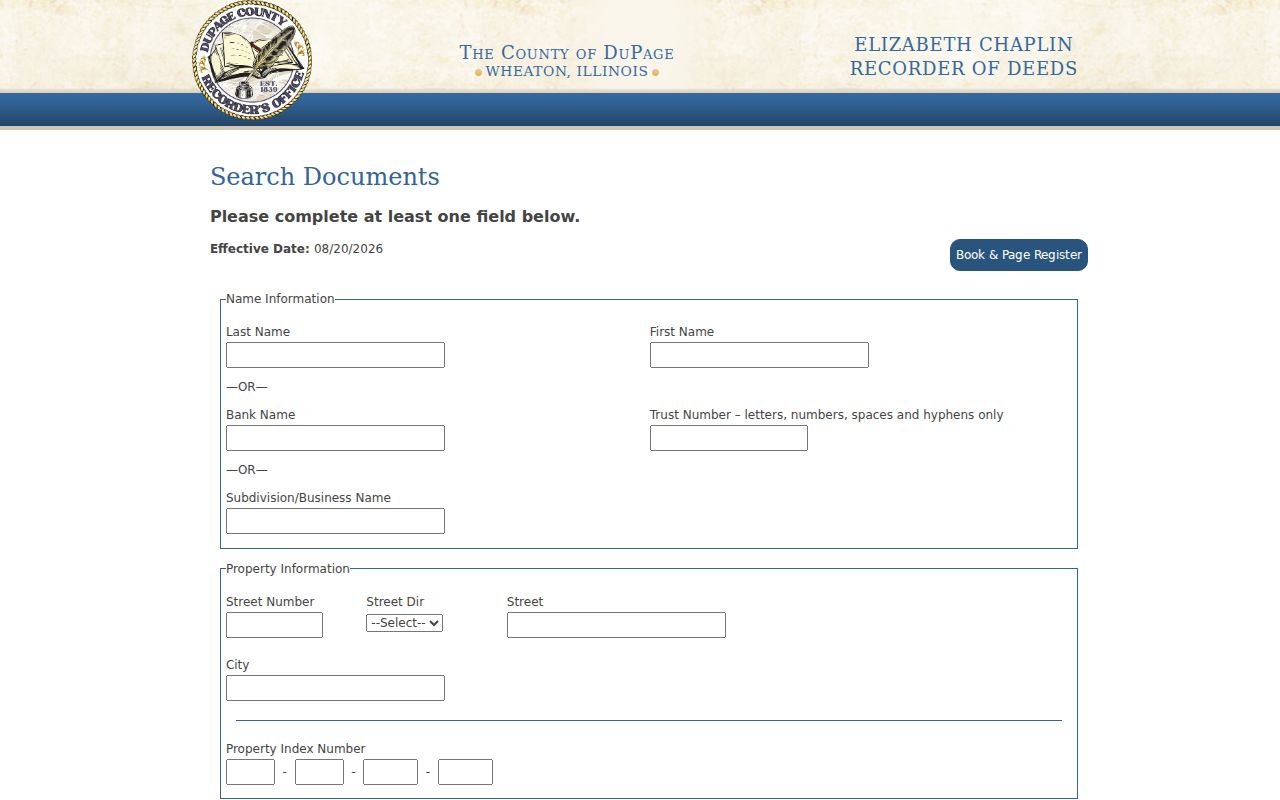
The different cutoffs explain why a name may work when an old address does not. Older work continues at the Wheaton office, on microfilm, in plats, or through archives.
Note: An online cutoff marks an index boundary, not the first year that county land records exist.
Bolingbrook Subdivisions Bridge the Years
Westbury, Colonial Village, and King's Park formed a 1961-1965 bridge to Village incorporation in 1965. The first homes appeared on Rocklyn Court and Avondale Court. A county record may say “Bolingbrook Subdivision” even when a resident recalls the sales name Westbury.
Plats and legal descriptions join those names. A nineteenth-century county deed may lead to a 1960s subdivision plat, then to a modern GIS polygon. Government labels, sales names, postal labels, and present neighborhood names can describe related land without using the same words.
Older Bolingbrook Deeds Stay Available
When a Will search ends online, the Recorder archives and copies service provides historical indexes, books, microfilm, workstations, and copy requests. Retain a full recording number when possible. Defined requests may use mail, fax, email, or pickup, and archive responses are usually made within two business days where possible.
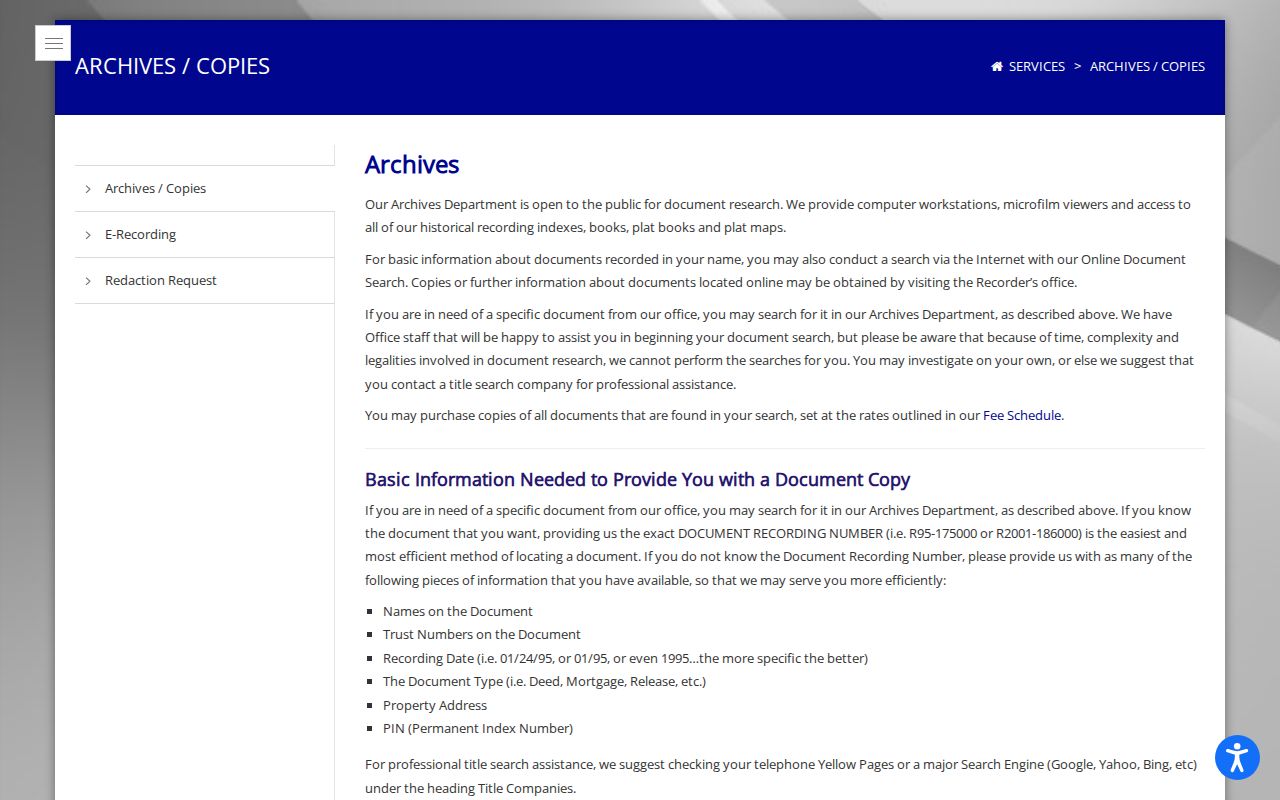
The screen is the fallback for deeds before the working web range. IRAD adds older Will and DuPage probate, naturalization, tax, court, marriage, birth, death, and poll-book series by catalog and date.
Bolingbrook Past Residents Beyond Owners
A deed names land parties. It does not list all occupants. The 1973 white-pages scan identifies subscribers and abbreviates Bolingbrook as “Bolngbrk.” Fountaindale reports phone books from 1977 onward. Those entries are clues, not complete households.
Pair a directory entry with the closest public census, map, deed, and newspaper item. Record whether each name is an owner, subscriber, child, heir, or other member. Full shelf details are on the Bolingbrook city directory page.
- Find the exact street in a dated directory.
- Test spelling variants and the “Bolngbrk” abbreviation.
- Compare the closest released census by township or enumeration area.
- Test adult names against deeds, probate, obituaries, and later volumes.
- Label each conclusion with its date and record role.
Note: A subscriber may be one person in a larger home, while an omitted person may still have lived there.
Maps Date Bolingbrook Address Changes
Fountaindale maps, DuPage Township aerials, plats, and Village building or engineering files can show when a road, lot, addition, easement, or structure appeared. The earliest public permit year and exact filters were not confirmed. Use a narrow address-and-date FOIA request when the portal is thin.
The Library of Congress Sanborn guide explains the search method, but no Bolingbrook-specific sheet was located.
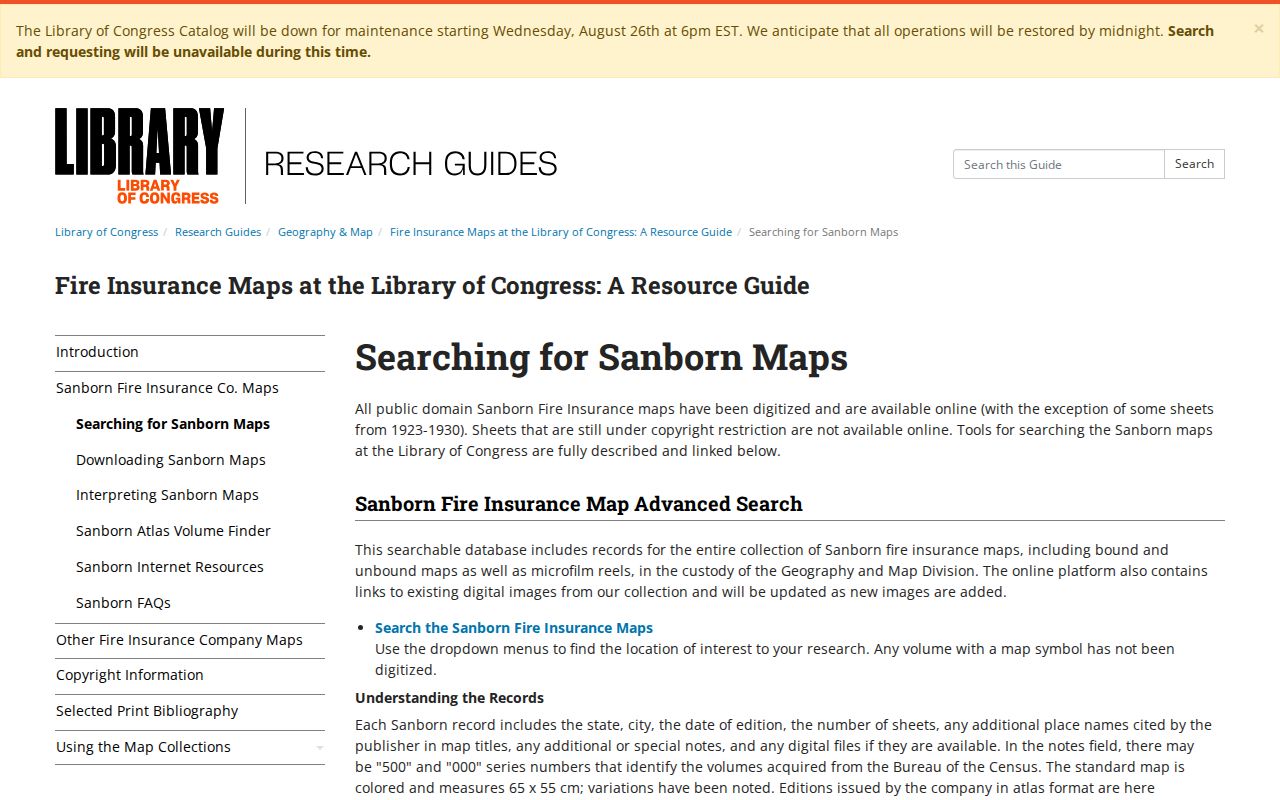
The image documents the route and the gap. It does not prove that a given Bolingbrook house appears on a Sanborn map.
Close Bolingbrook Previous Resident Trails
Obituaries, probate, cemetery files, marriages, yearbooks, and newspapers can close gaps after someone leaves. Joliet Public Library holds Will directories, newspapers, obituary indexes, yearbooks, and maps. DuPage County Historical Museum offers directories, newspapers, maps, photos, and property research. Fountaindale adds local records and school ledgers.
Probate is most useful when a deed shifts through an executor, guardian, conservator, or estate. Match the court party, death date, parcel description, and later recorder filing rather than treating a shared surname as proof. Will probate holdings at IRAD cover 1837 through 1900, while later files route through the circuit clerk. DuPage-side work follows its own clerk and archive series. Certified vital copies remain subject to Illinois eligibility rules, so an obituary or public index may be the first practical family link.
Hillcrest Cemetery is the current Village cemetery inquiry route. Boardman Cemetery is a separate preservation clue. No public Bolingbrook interment-name index was found. Historic Preservation reported old-negative scanning in August 2025 and newspaper and recorder digitization in March 2026, so catalog reach may grow.
Lawful use. Research previous residents for house history, family history, heirs, or personal curiosity. Never use an address trail to watch, harass, threaten, or harm a living person.